


Fresh herbs are one of the easiest ways to elevate everyday meals to something extraordinary. Whether you’re sprinkling parsley over roasted vegetables or infusing sauces with fragrant basil, knowing how to properly prepare fresh herbs makes all the difference in your cooking.
Fresh herbs like basil, rosemary, parsley, thyme, cilantro, mint, sage and oregano offer vibrant flavor, aroma and a finishing touch that dried herbs just can’t match. But because they’re delicate and perishable, it’s important to handle them with care. This guide will walk you through everything from selecting and cleaning herbs to cutting, storing, and using them in your favorite dishes.
1. Choose the Best Fresh Herbs
Start with quality herbs. Look for:
- Bright, vivid color – no yellowing or browning.
- Firm, perky stems and leaves – wilted herbs won’t have much flavor.
- Strong aroma when smelled – that’s a sign of robust essential oils.
Herbs can vary by type:
- Tender Herbs: basil, parsley, cilantro, mint, dill — delicate and best used fresh.
- Hardy Herbs: rosemary, thyme, sage, oregano — tougher stems and more resilient.
2. Wash and Dry Herbs Properly
Even store-bought herbs can carry grit, bugs or dust — so washing is key:
- Rinse gently under cold running water or swish in a bowl.
- Shake off excess water, then pat dry with a clean kitchen towel or paper towels.
- Use a salad spinner for delicate leaves like parsley or cilantro — this removes moisture without bruising.
- Drying matters: Too much moisture speeds up decay, so drying before storage or chopping helps them last longer.
Tip: Wait to wash herbs until right before you prepare them. Washing too early can shorten shelf life.
3. Strip and Sort Leaves
Different herbs require different prep:
- Tender herbs: Pinch leaves from stems or hold at the top and slide your fingers down to remove leaves.
- Woody stems: Herbs like rosemary or thyme need their leaves stripped from the stems before chopping.
- Stems you can use: Cilantro and parsley stems are tender and flavorful, especially in stocks or sautés.
4. Cutting Techniques to Release Flavor
How you cut herbs affects how much flavor they release:
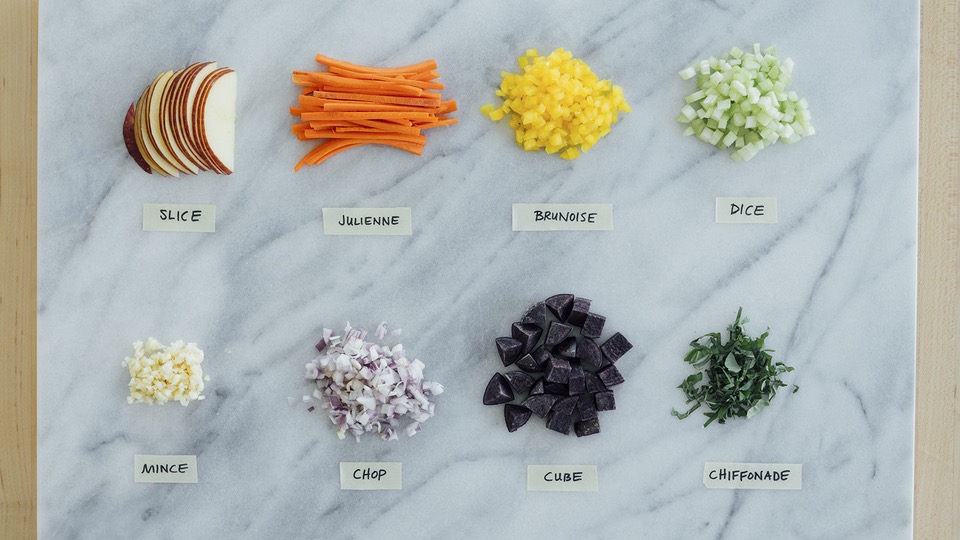
Chop or mince
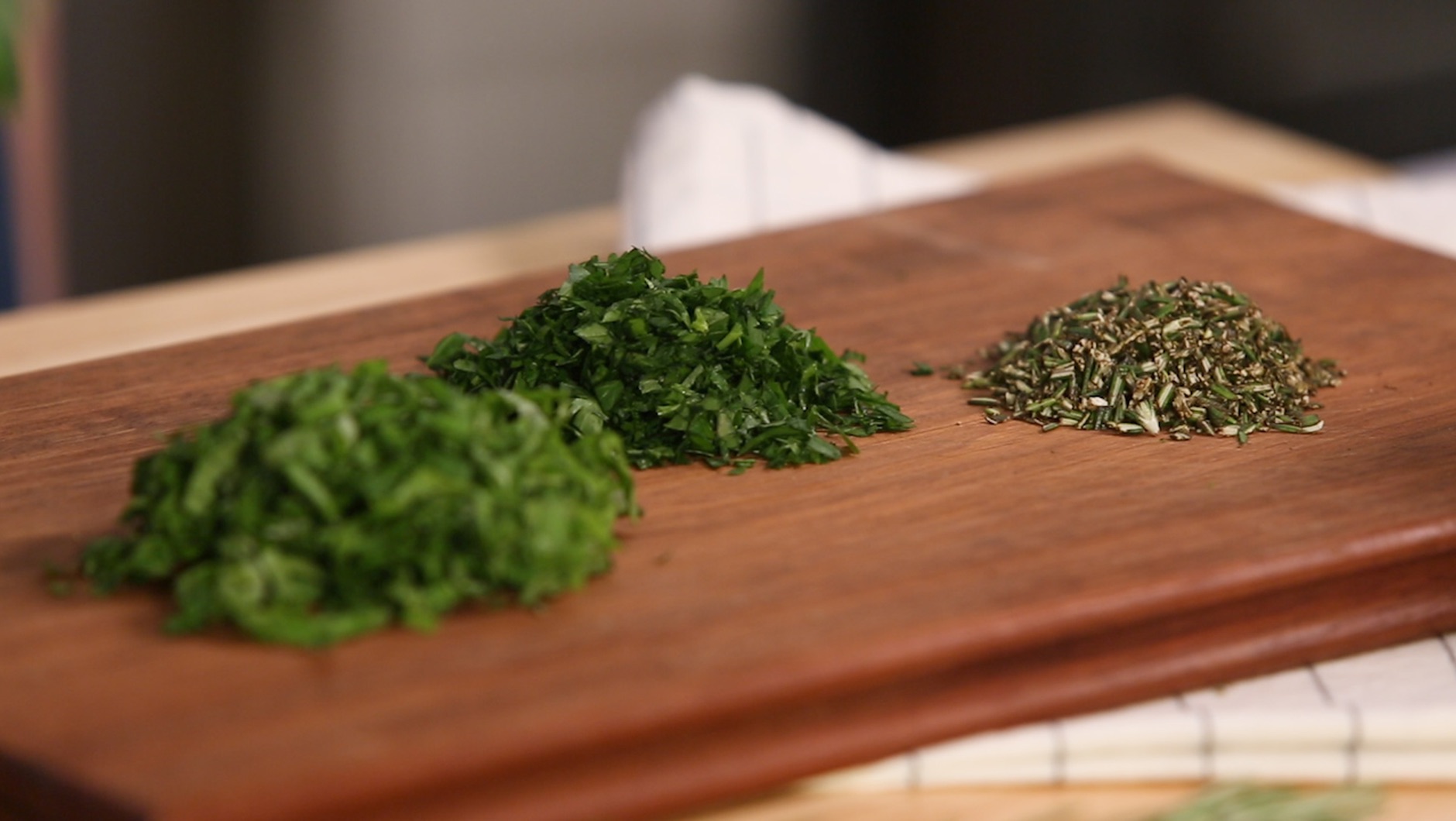
- Soft herbs (basil, parsley, cilantro, mint): gather leaves and gently chop with a sharp knife.
- Hard herbs (rosemary, thyme, oregano, sage): chop fine if you’re infusing flavor during cooking — a little goes a long way.
Chiffonade (Ribbon Cut)
This classic technique creates long, thin strips that look beautiful on salads and garnishes:
- Stack washed leaves (e.g., basil).
- Roll into a tight cylinder.
- Slice thinly across the roll.
It’s great for basil, mint or leafy greens.
Knife tip: Always use a sharp knife — dull blades bruise herbs, leading to quicker wilting and loss of flavor.
5. When to Add Herbs in Cooking
Timing matters! The heat of cooking changes how herbs show up in your dish:
Add early (for infused flavor):
Hardy herbs like rosemary, thyme, and bay leaves can go in at the start of cooking — ideal for soups, stews, roasts, and braises.
Add late (for bright finish):
Tender herbs are best added at the end of cooking or as a garnish — so they keep their vibrant aroma and color. Sprinkle them just before serving on salads, grilled meats, pasta, or sauces.
6. Storing Fresh Herbs So They Last Longer
Fresh herbs are more perishable than dried — but with the right storage they can stay usable for days or weeks.
Tender herbs (basil, cilantro, parsley, mint)
- Jar of water: Trim stems, place in a glass with a bit of water like a bouquet.
- Loosely cover with a plastic bag and refrigerate (or room temp for basil).
- Change water every couple of days to maximize freshness.
Hardy herbs (rosemary, thyme, sage, oregano)
- Wrap gently in a damp paper towel and store inside a resealable bag in the fridge.
- Alternately, freeze in herb bundles or herb + oil cubes.
Long-term storage tricks:
- Freeze finely chopped herbs in ice cube trays with olive oil or water — perfect for soups and sauces.
- Dry hardy herbs by hanging small bunches upside down in a cool, dry place for future use.
7. Flavor Pairings & Usage Tips
Different herbs complement different foods:
- Basil: tomatoes, pasta, salads
- Cilantro: Latin/Asian dishes, salsas
- Parsley: soups, eggs, roasted veggies
- Rosemary: roast meats, potatoes
- Thyme & Sage: poultry, stews, stuffing dishes
Experiment with combinations too — fresh herbs can be layered for complex flavor profiles.
8. Common Herb Prep Mistakes to Avoid
- Using a dull knife — bruises herbs and dulls flavor.
- Washing too early — causes herbs to spoil faster.
- Chopping too far ahead — exposure to air accelerates oxidation and browning.
- Adding tender herbs too early — heat destroys delicate aromas.
Fresh Herbs = Fresh Flavor
Mastering fresh herb preparation isn’t hard — but it is transformative. With proper washing, chopping, timing and storage, herbs become more than just a garnish: they’re a key flavor component that can turn everyday meals into unforgettable ones. Keep experimenting, and soon you’ll intuitively know how to handle each herb with confidence.